
Course Handbook
BUS 225 — Fundamentals of Business Ethics
BUS 225
Free preview — first 50% of pages · use Next for each page
California Century University · edu.namecentury.com
Country from reader IP via GeoIP — no personal data stored.
Showing 27 of 54 handbook pages (50% free preview). Enroll for the full book, vocabulary notes, and library sync.

Course Handbook
BUS 225
Free preview — first 50% of pages · use Next for each page
California Century University Editor

California Century University
Course Handbook
BUS 225
Based on: OpenStax — Business Ethics (ISBN 978-1-947172-57-9)
Publication date: June 24, 2026
California Century University · Distance Education · APA 7th Edition Format
Condensed study manual (~119 A4 pages · approximately 17% of source textbook length)
Welcome to BUS 225 — Fundamentals of Business Ethics at California Century University (CCU). This course is meticulously designed to equip you with a foundational understanding of ethical principles and their practical application within the contemporary business landscape. As a working-adult learner, you bring invaluable real-world experience to this academic endeavor, and this handbook serves as your essential companion throughout your self-paced journey.
This official course handbook for BUS 225 — Fundamentals of Business Ethics is your primary resource for navigating the complexities of ethical decision-making in business. Its purpose is multifaceted: to provide a structured learning path, clarify core concepts, and facilitate your engagement with the course material. In today's interconnected global economy, ethical conduct is not merely an abstract ideal but a critical component of sustainable success, corporate reputation, and societal well-being (OpenStax, 2023). This course will delve into various ethical theories, explore common dilemmas faced by businesses, and foster your ability to analyze and resolve ethical challenges with integrity and foresight.
Drawing extensively from the OpenStax textbook, Business Ethics (ISBN 978-1-947172-57-9), this handbook condenses key information, highlights essential learning objectives, and provides a framework for understanding the material. While the OpenStax textbook serves as the foundational text, this handbook offers a curated and streamlined approach, specifically tailored for the distance-education format and the needs of working professionals.
This handbook is structured into distinct units, each designed to guide you through specific topics in business ethics. To maximize your learning experience, we recommend the following approach:
As a working-adult learner, you possess unique strengths, including self-discipline and practical experience. However, balancing academic pursuits with professional and personal commitments requires strategic planning. CCU is committed to supporting your success in this self-paced distance-education environment.
Consider the following strategies for optimal learning:
Academic integrity is a cornerstone of California Century University's educational philosophy. Throughout your studies at CCU, and particularly in this course, you will be expected to adhere to the guidelines of the American Psychological Association (APA) 7th edition for all written assignments. This handbook itself employs APA 7th edition style for in-text citations and formatting, providing you with practical examples.
Proper citation acknowledges the intellectual contributions of others and strengthens the credibility of your own work. When you incorporate ideas, information, or direct quotes from external sources, including our primary OpenStax textbook, you must provide appropriate citations. For instance, when referencing a concept or finding from our OpenStax textbook, an in-text citation would typically appear as follows:
Ethical leadership is crucial for fostering a culture of integrity within an organization, influencing employee behavior and decision-making at all levels (OpenStax, 2023).
This example demonstrates how to cite a general idea or paraphrase from the OpenStax textbook. Should you quote directly, you would also include the page number (or paragraph number for online sources without page numbers). Familiarizing yourself with APA 7th edition guidelines early in the course will be beneficial for your success in BUS 225 and across your academic career at CCU. Resources on APA style are readily available through the CCU Library and Writing Center.
We are confident that with dedication and effective use of this handbook, you will find BUS 225 — Fundamentals of Business Ethics to be an enriching and highly relevant learning experience. We wish you success in your studies!
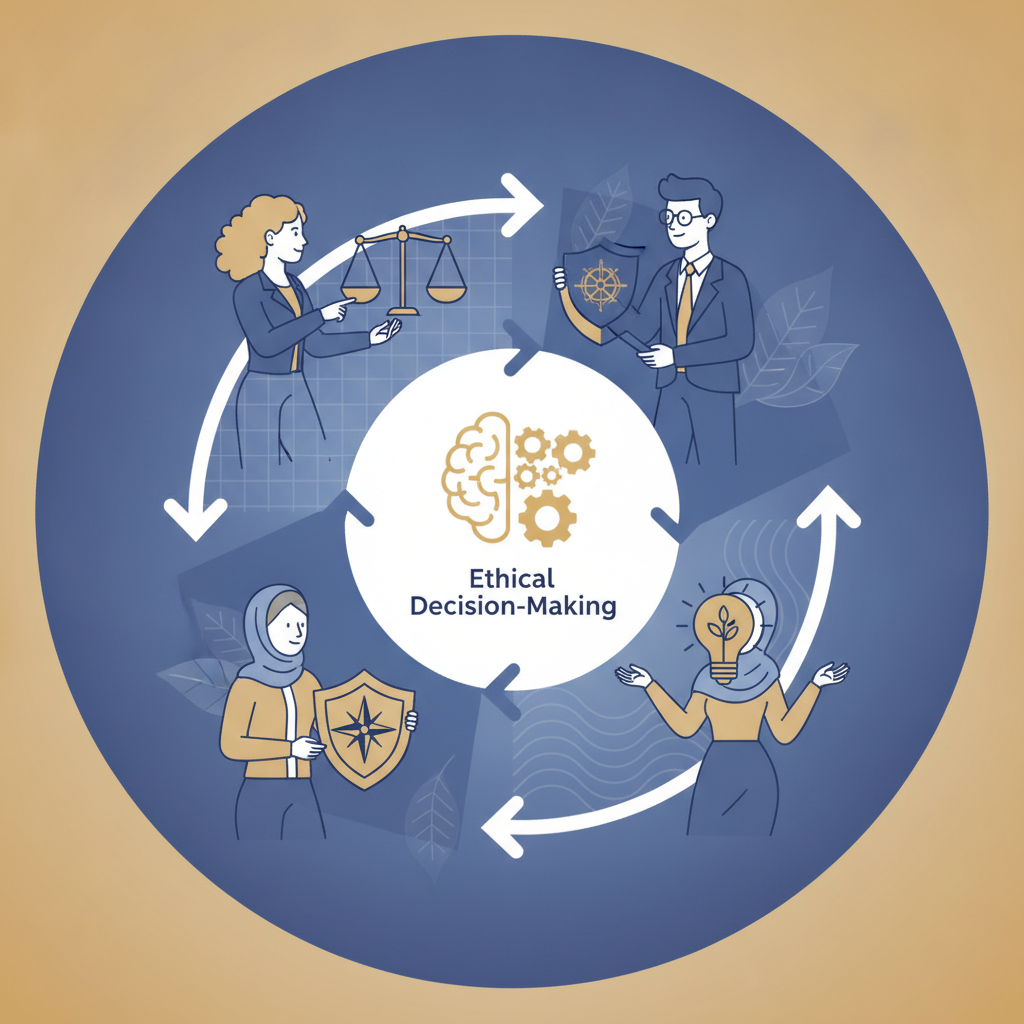
Welcome to BUS 225 — Fundamentals of Business Ethics. This unit serves as a foundational exploration into the critical role of ethics in the contemporary business landscape. In an era characterized by rapid technological advancements, global interconnectedness, and increasing societal expectations, understanding and applying ethical principles is no longer merely an option but a strategic imperative for individuals and organizations alike. This unit will delve into the fundamental concepts of business ethics, trace the historical development of ethical thought, and introduce the crucial stakeholder approach to understanding the complex interplay between business, society, and ethical responsibility.
Drawing upon the insights from OpenStax's Business Ethics, we will examine why ethical conduct is paramount for building trust, ensuring long-term sustainability, and fostering a positive organizational culture. We will also explore how ancient philosophical traditions continue to inform modern ethical decision-making and how the stakeholder framework provides a comprehensive lens through which to analyze a business's responsibilities beyond its shareholders. By the end of this unit, you will possess a robust understanding of the theoretical underpinnings and practical implications of ethical behavior in the professional realm, preparing you to navigate the complex moral challenges inherent in business operations.
Ethics, at its core, is the systematic study of what is right and wrong, good and bad, and the moral duties and obligations that guide human behavior. It provides a framework for making choices that align with principles of fairness, justice, and respect. In the context of business, ethics extends these principles to the commercial sphere, examining the moral dimensions of business practices, decisions, and policies (OpenStax, 2023). Business ethics is not merely about avoiding legal transgressions; it is about cultivating a culture of integrity, responsibility, and accountability that permeates every level of an organization.
To fully appreciate the scope of business ethics, it is essential to distinguish between several related concepts. Ethics refers to the philosophical discipline concerned with moral principles that govern a person's or group's behavior. It is a normative science, meaning it prescribes how people ought to act, rather than merely describing how they do act. Morality, often used interchangeably with ethics, typically refers to the actual practices and beliefs of a given group or individual regarding right and wrong. While ethics is the theoretical framework, morality is its practical application (OpenStax, 2023).
Business ethics, then, is the application of ethical principles and moral reasoning to business situations. It involves analyzing ethical problems that arise in a business environment and developing strategies to address them. These problems can range from individual decisions, such as whether to accept a gift from a supplier, to organizational policies, such as environmental impact or labor practices, and even to systemic issues within an industry (OpenStax, 2023). The field of business ethics considers the ethical responsibilities of businesses to their various stakeholders, including employees, customers, investors, suppliers, communities, and the environment.
The significance of ethical conduct in business cannot be overstated. In today's transparent and interconnected world, unethical behavior can have devastating consequences, not only for the individuals involved but also for the entire organization and its broader ecosystem. Conversely, a strong commitment to ethics can yield substantial benefits, fostering trust, enhancing reputation, and ensuring long-term sustainability (OpenStax, 2023).
Building Trust and ReputationTrust is the bedrock of all successful relationships, and this holds especially true in business. Customers are more likely to purchase from companies they trust, investors are more inclined to fund ethical enterprises, and employees are more loyal to organizations that demonstrate integrity. A company's reputation, built over years of consistent ethical behavior, is an invaluable asset. It signals reliability, honesty, and a commitment to quality and fairness. When a company acts unethically, this trust can be shattered instantly, leading to boycotts, loss of market share, and a tarnished image that can take years, if not decades, to repair (OpenStax, 2023). For instance, a financial institution that engages in fraudulent practices not only faces legal repercussions but also loses the confidence of its clients, who may then seek services elsewhere, impacting the firm's viability.
Legal and Regulatory ComplianceWhile ethics often extends beyond the letter of the law, a strong ethical foundation is crucial for ensuring legal and regulatory compliance. Laws and regulations often codify society's minimum ethical standards. Companies that prioritize ethics are less likely to engage in activities that could lead to legal penalties, such as fraud, discrimination, environmental violations, or antitrust breaches. Adhering to ethical principles can help businesses anticipate and adapt to evolving legal landscapes, reducing the risk of costly lawsuits, fines, and criminal charges (OpenStax, 2023). For example, a pharmaceutical company committed to ethical research practices is less likely to face legal challenges regarding drug safety or misleading advertising.
Employee Morale and ProductivityAn ethical workplace fosters a positive and supportive environment where employees feel valued, respected, and motivated. When employees perceive that their organization operates with integrity, they are more likely to be engaged, committed, and productive. Ethical leadership inspires loyalty and reduces turnover, as individuals prefer to work for companies whose values align with their own. Conversely, unethical practices, such as unfair treatment, discrimination, or a disregard for employee well-being, can lead to low morale, resentment, and decreased productivity (OpenStax, 2023). Employees in an ethical organization are more likely to report wrongdoing, contributing to a culture of transparency and accountability.
Risk ManagementEthical practices serve as a powerful form of proactive risk management. By embedding ethics into decision-making processes, businesses can identify and mitigate potential risks before they escalate into crises. This includes risks related to product safety, data privacy, supply chain practices, and financial reporting. A company with a robust ethical framework is better equipped to navigate complex challenges, respond effectively to unforeseen events, and protect its assets and stakeholders from harm (OpenStax, 2023). Consider a technology company that prioritizes data privacy and invests in robust security measures; it significantly reduces the risk of data breaches and the associated financial and reputational damage.
Sustainability and Long-Term Value CreationIn the long run, ethical behavior is inextricably linked to a company's sustainability and its ability to create enduring value. Businesses that consider their social and environmental impact, treat their employees fairly, and engage transparently with their communities are more likely to earn the social license to operate. This holistic approach, often encapsulated by the concept of Corporate Social Responsibility (CSR), contributes to a positive public image, attracts socially conscious investors, and fosters innovation that addresses societal needs. Ethical businesses are better positioned to adapt to changing market demands, regulatory pressures, and societal expectations, ensuring their viability for future generations (OpenStax, 2023). For example, a manufacturing firm that invests in sustainable production methods not only reduces its environmental footprint but also appeals to a growing segment of environmentally conscious consumers.
Despite the clear benefits of ethical conduct, businesses frequently encounter situations that present significant ethical challenges. An ethical dilemma is a situation where an individual or organization must choose between two or more actions, each of which has a strong moral justification, but where choosing one course of action means compromising another moral principle (OpenStax, 2023). These dilemmas are often complex, with no easy answers, and can involve conflicting values, loyalties, or responsibilities.
Common ethical dilemmas in business include:
Navigating these dilemmas requires careful consideration, adherence to ethical frameworks, and often, courage. It underscores the need for individuals within organizations to develop strong moral reasoning skills and for organizations to establish clear ethical guidelines and support systems (OpenStax, 2023).
Ultimately, business ethics is not an abstract concept; it is deeply intertwined with the personal values of individuals and their professional conduct. Every decision made by an employee, from the entry-level associate to the CEO, has an ethical dimension. Personal integrity, honesty, fairness, and respect are foundational virtues that translate directly into ethical professional behavior. When an individual's personal values align with the ethical culture of their organization, it creates a powerful synergy that reinforces positive conduct (OpenStax, 2023).
For working-adult learners, understanding business ethics is particularly crucial. As professionals, you are often faced with complex decisions that impact not only your career but also your colleagues, customers, and the wider community. Developing a strong ethical compass and the ability to apply ethical reasoning frameworks will empower you to make sound judgments, uphold your personal integrity, and contribute positively to your organization's ethical standing. This unit lays the groundwork for understanding these principles and their profound impact on the world of business.
The quest for understanding right and wrong, and the principles that should guide human conduct, is as old as civilization itself. Ethical thought has evolved over millennia, shaped by philosophers, religious traditions, and societal changes. Many of the foundational concepts that inform modern business ethics have their roots in ancient philosophical traditions. Understanding this historical trajectory provides a richer context for appreciating contemporary ethical challenges and frameworks (OpenStax, 2023).
The intellectual birthplace of Western ethical philosophy is often traced back to ancient Greece, where thinkers like Socrates, Plato, and Aristotle laid the groundwork for systematic moral inquiry.
Socrates: The Unexamined Life and the Pursuit of VirtueSocrates (c. 470–399 BCE) famously asserted that "the unexamined life is not worth living." He believed that true wisdom lay in recognizing one's own ignorance and constantly questioning assumptions, particularly concerning moral concepts. Socrates' method of inquiry, the Socratic method, involved rigorous questioning to expose contradictions in beliefs and arrive at a clearer understanding of ethical principles. He contended that virtue is knowledge, and vice is ignorance; therefore, people act unethically because they do not truly know what is good. For Socrates, the ultimate goal was to achieve moral excellence and live a virtuous life (OpenStax, 2023). In a business context, Socratic inquiry encourages critical self-reflection on organizational practices and individual motives, pushing leaders to question whether their actions genuinely align with ethical principles rather than merely assumed good intentions.
Plato: Justice in the State and the IndividualPlato (c. 428–348 BCE), Socrates' most famous student, expanded on his teacher's ideas, particularly in his seminal work, The Republic. Plato explored the concept of justice, both in the ideal state and in the individual soul. He proposed that a just society, like a just individual, achieves harmony when its different parts function according to their proper roles. For Plato, the cardinal virtues—wisdom, courage, temperance, and justice—were essential for both personal and societal well-being. He believed that ethical behavior stemmed from reason controlling the appetites and emotions. In business, Plato's ideas suggest that an ethical organization is one where different departments and individuals work in harmony, guided by wise leadership and a commitment to fairness and integrity, ensuring that no single part dominates at the expense of the whole (OpenStax, 2023).
Aristotle: Virtue Ethics and the Golden MeanAristotle (384–322 BCE), a student of Plato, developed a comprehensive system of ethics known as virtue ethics. Unlike his predecessors who focused on abstract ideals, Aristotle emphasized the development of character and moral habits. He argued that the ultimate goal of human life is eudaimonia, often translated as flourishing or living well, which is achieved through virtuous activity. Virtues, for Aristotle, are character traits that enable individuals to live a good life. He introduced the concept of the Golden Mean, suggesting that virtue lies in a balance between two extremes of deficiency and excess. For example, courage is the mean between cowardice and recklessness (OpenStax, 2023).
In business, Aristotle's virtue ethics encourages individuals and organizations to cultivate virtues such as honesty, integrity, fairness, and compassion. It shifts the focus from merely following rules or calculating consequences to developing a strong moral character. An ethical leader, from an Aristotelian perspective, is one who consistently demonstrates these virtues, inspiring similar behavior in others and fostering an organizational culture where ethical conduct is habitual and deeply ingrained (OpenStax, 2023). For example, a company that consistently demonstrates fairness in its dealings with employees and suppliers, even when it might be less profitable in the short term, is embodying Aristotelian virtue.
Moving into the Enlightenment period, ethical thought took new directions, emphasizing reason, individual rights, and the consequences of actions. Two highly influential figures from this era are Immanuel Kant and John Stuart Mill.
Immanuel Kant: Deontology and the Categorical ImperativeImmanuel Kant (1724–1804), a German philosopher, developed deontology, an ethical framework that emphasizes duties and rules. For Kant, the morality of an action is based on whether it adheres to a rule, not on its consequences. He famously proposed the Categorical Imperative, a universal moral law that applies to all rational beings, regardless of their desires or circumstances. The Categorical Imperative has several formulations, two of the most prominent being (OpenStax, 2023):
In business, Kantian ethics dictates that certain actions are inherently right or wrong, regardless of their outcomes. For example, deceiving customers or exploiting employees would be unethical because it treats them merely as means to achieve profit, rather than as ends in themselves. Honesty, promise-keeping, and respecting individual rights are paramount. A company operating under Kantian principles would prioritize fair labor practices, transparent dealings, and truthful advertising, even if these actions might not always maximize short-term profits (OpenStax, 2023).
John Stuart Mill: Utilitarianism and the Greatest GoodJohn Stuart Mill (1806–1873), an English philosopher and economist, was a leading proponent of utilitarianism, an ethical theory focused on consequences. Utilitarianism holds that the most ethical action is the one that produces the greatest good for the greatest number of people. It is a form of consequentialism, where the morality of an action is judged by its outcome. Mill refined the ideas of Jeremy Bentham, emphasizing the quality of happiness (higher vs. lower pleasures) rather than just the quantity (OpenStax, 2023).
In business, utilitarianism often involves a cost-benefit analysis, where decisions are made based on which option will yield the most positive overall outcome for all affected parties. For example, a company might decide to implement a new production process that, while causing some job displacement, ultimately leads to lower prices for consumers and greater overall economic benefit. Utilitarian thinking is prevalent in public policy, risk assessment, and strategic planning. However, a challenge for utilitarianism in business is ensuring that the rights and well-being of minority groups are not sacrificed for the benefit of the majority (OpenStax, 2023).
While ethical considerations have always been present in commerce, business ethics emerged as a distinct academic discipline and field of practice in the latter half of the 20th century. This development was spurred by several factors (OpenStax, 2023):
Today, business ethics is an integral part of business education and corporate governance, recognizing that ethical leadership and decision-making are crucial for long-term success and societal well-being (OpenStax, 2023).
To summarize and reinforce, the major ethical theories provide distinct lenses through which to analyze business decisions:
These theories are not mutually exclusive; often, a comprehensive ethical analysis requires considering insights from multiple frameworks. For working-adult learners, understanding these theories provides a powerful toolkit for dissecting complex ethical dilemmas and justifying decisions in a principled manner.
Traditionally, business focused primarily on maximizing shareholder wealth. However, this narrow view has evolved significantly, particularly with the development of stakeholder theory. This approach recognizes that businesses operate within a complex web of relationships and have responsibilities to a much broader group of constituents than just their owners (OpenStax, 2023). The stakeholder approach provides a powerful framework for understanding the ethical obligations of businesses and for making decisions that consider the diverse impacts of corporate actions.
At its core, stakeholder theory posits that a business's success is dependent on its ability to manage relationships with all groups that have a "stake" in its operations. R. Edward Freeman, a key figure in developing stakeholder theory, defined a stakeholder as "any group or individual who can affect or is affected by the achievement of the organization's objectives" (Freeman, 1984, as cited in OpenStax, 2023). This broad definition moves beyond the traditional focus on shareholders (owners) to include a wide array of individuals and groups.
Categorization of StakeholdersStakeholders can be categorized in various ways to better understand their relationship with the organization:
Examples of Stakeholders:
The concept of stakeholder theory gained prominence in the 1980s, largely through the work of R. Edward Freeman, who challenged the prevailing notion of "shareholder primacy." Shareholder primacy holds that the sole purpose of a corporation is to maximize profits for its shareholders. Freeman argued that this view is too narrow and fails to account for the complex reality of modern business. He contended that businesses have moral obligations to all groups that contribute to their success or are affected by their operations (OpenStax, 2023).
This shift represents a move from a purely economic perspective to a broader socio-economic and ethical perspective. It acknowledges that businesses are not isolated entities but are deeply embedded in society, drawing resources from and impacting various groups. The evolution of stakeholder theory has encouraged businesses to adopt a more holistic view of value creation, considering not just financial returns but also social and environmental impacts (OpenStax, 2023).
Effective stakeholder management is not merely an ethical ideal; it is a strategic necessity for long-term business success and sustainability. Engaging with stakeholders proactively and ethically offers numerous benefits:
Enhanced Decision-MakingBy considering the perspectives and interests of diverse stakeholders, businesses can make more informed, robust, and sustainable decisions. Engaging employees in strategic planning, consulting with customers on product development, or collaborating with community groups on local initiatives can lead to innovative solutions and prevent unforeseen negative consequences (OpenStax, 2023). For example, a mining company that consults with local indigenous communities before commencing operations is likely to develop a more socially acceptable and sustainable plan.
Risk MitigationIgnoring stakeholder concerns can lead to significant risks, including reputational damage, legal challenges, protests, boycotts, and loss of the social license to operate. Proactive stakeholder engagement allows businesses to identify potential issues early, address grievances, and build goodwill, thereby reducing the likelihood of costly conflicts and crises (OpenStax, 2023). A food manufacturer that actively listens to consumer feedback regarding product safety concerns can address issues before they escalate into a major recall.
Innovation and Value CreationCollaboration with stakeholders can be a powerful source of innovation. Customers can provide insights into unmet needs, suppliers can offer new technological solutions, and community partners can identify opportunities for social innovation. By integrating these diverse perspectives, businesses can develop new products, services, and business models that create value for a wider range of constituents (OpenStax, 2023). For instance, a technology company that partners with disability advocacy groups might develop more accessible and inclusive products, opening up new markets.
Improved Reputation and TrustBusinesses that consistently demonstrate a commitment to ethical stakeholder management build a strong reputation for trustworthiness and social responsibility. This positive image can attract top talent, enhance customer loyalty, draw ethical investors, and foster a supportive regulatory environment (OpenStax, 2023). A company known for its fair labor practices and environmental stewardship will likely be viewed more favorably by the public and potential employees.
Long-Term SustainabilityUltimately, balancing the interests of various stakeholders is crucial for a business's long-term viability. A company that prioritizes short-term shareholder gains at the expense of employee well-being, customer satisfaction, or environmental health is unlikely to thrive in the long run. Sustainable businesses integrate economic, social, and environmental considerations into their core strategy, recognizing that these factors are interdependent (OpenStax, 2023).
Given the multitude of potential stakeholders, businesses must develop systematic approaches to identify and prioritize them. Not all stakeholders have the same level of influence or urgency. One widely used framework for stakeholder prioritization is based on three attributes: power, legitimacy, and urgency (Mitchell, Agle, & Wood, 1997, as cited in OpenStax, 2023).
Stakeholders possessing all three attributes (power, legitimacy, and urgency) are considered "definitive stakeholders" and require immediate and significant attention. Those with fewer attributes may still be important but might require different engagement strategies. The process of stakeholder mapping helps organizations visualize these relationships and prioritize their engagement efforts (OpenStax, 2023).
Once stakeholders are identified and prioritized, effective engagement strategies are crucial. These strategies can range from simple communication to deep collaboration:
The choice of engagement strategy depends on the nature of the stakeholder, the issue at hand, and the desired outcome. The goal is to build constructive relationships that foster mutual understanding and trust (OpenStax, 2023).
Stakeholder theory is deeply intertwined with the concept of Corporate Social Responsibility (CSR). CSR refers to a company's commitment to operate in an economically, socially, and environmentally sustainable manner, going beyond legal obligations. It is the practical application of stakeholder theory, where businesses actively integrate social and environmental concerns into their business operations and interactions with their stakeholders (OpenStax, 2023).
The "triple bottom line" framework (people, planet, profit) is a popular way to conceptualize CSR, emphasizing that businesses should measure their success not just by financial performance but also by their social and environmental impact. By adopting a CSR approach informed by stakeholder theory, businesses aim to create shared value, benefiting both the company and society (OpenStax, 2023).
While the benefits of stakeholder management are clear, implementing it effectively presents several challenges:
For working-adult learners, understanding the stakeholder approach is essential for navigating the complexities of modern business. It provides a framework for ethical decision-making that considers the broader impact of business actions, fostering a more responsible and sustainable approach to commerce.

Welcome to Unit 2 of BUS 225, "Fundamentals of Business Ethics." In this unit, we delve deeper into the practical application of ethical principles within organizational structures and individual decision-making processes. We will explore how an organization's culture, leadership, and formal programs shape its ethical landscape. Furthermore, we will examine the intricate process of individual ethical decision-making, considering the psychological factors and moral frameworks that influence our choices. Finally, we will broaden our perspective to address the complex ethical challenges presented by an increasingly globalized business environment. Understanding these dynamics is crucial for working adults aspiring to lead and contribute ethically in today's complex business world.
The ethical health of an organization is not merely a matter of individual integrity; it is profoundly shaped by its culture, the quality of its leadership, and the robustness of its ethics programs. This section explores how these elements coalesce to create an environment where ethical conduct is either fostered or undermined (OpenStax, 2023).
An organization's culture represents the shared values, beliefs, customs, behaviors, and artifacts that characterize its members and define its way of doing business. It is an unwritten, yet powerful, guide for employee behavior, often more influential than formal rules and policies. When an organization's culture is strong and aligned with ethical principles, it can serve as a powerful force for good, promoting integrity, transparency, and responsibility. Conversely, a weak or ethically misaligned culture can create an environment ripe for misconduct (OpenStax, 2023).
Defining Organizational CultureOrganizational culture can be understood as the "personality" of an organization. It encompasses both observable elements, such as dress codes, office layouts, and communication styles, and unobservable elements, such as core values, assumptions, and beliefs about how things should be done. These deeper, often unspoken, elements are particularly critical in shaping ethical behavior. For instance, a culture that implicitly rewards aggressive sales tactics, even if they border on deception, will likely see employees engage in such behaviors, regardless of formal policies against them (OpenStax, 2023).
Types of Ethical CulturesEthical cultures can vary widely, but they generally fall along a spectrum from compliance-based to integrity-based. A compliance-based culture emphasizes adherence to rules, regulations, and laws. Its primary goal is to prevent illegal behavior through strict controls, penalties, and monitoring. While necessary, a purely compliance-based approach can foster a "check-the-box" mentality, where employees focus on avoiding punishment rather than internalizing ethical values. It may also lead to a perception that anything not explicitly forbidden is permissible (OpenStax, 2023).
In contrast, an integrity-based culture goes beyond mere legal compliance. It focuses on fostering a shared commitment to ethical values and principles, encouraging employees to act with integrity even when there is no explicit rule or oversight. This type of culture promotes self-governance, personal responsibility, and a proactive approach to ethical dilemmas. It encourages open dialogue about ethical issues and empowers employees to make sound moral judgments (OpenStax, 2023).
Most effective ethical cultures incorporate elements of both approaches, establishing clear compliance guidelines while simultaneously nurturing an environment of integrity and ethical awareness. The goal is to move beyond simply preventing wrongdoing to actively promoting responsible and ethical conduct as an integral part of the organization's identity.
Factors Shaping Ethical CultureSeveral factors contribute to the formation and evolution of an organization's ethical culture:
Cultivating a strong ethical culture requires continuous effort, consistent messaging, and a willingness to address ethical lapses promptly and fairly.
The importance of leadership in shaping an organization's ethical climate cannot be overstated. Leaders, from top executives to frontline managers, are the primary architects and custodians of ethical culture. Their actions, decisions, and communication serve as powerful signals that either reinforce or undermine ethical values (OpenStax, 2023).
The Role of Ethical LeadersEthical leaders are individuals who not only act ethically themselves but also actively promote ethical conduct among their followers. They embody the organization's values, communicate clear ethical expectations, and hold themselves and others accountable for ethical behavior. Key roles of ethical leaders include:
While specific leadership styles may vary, ethical leaders typically share several core characteristics:
The concept of "tone at the top" is critical here. If senior leadership demonstrates a genuine commitment to ethics, this commitment tends to cascade throughout the organization. Conversely, if top leaders are perceived as indifferent or hypocritical, formal ethics programs are likely to be viewed with cynicism and ineffective.
While culture and leadership provide the foundational ethical environment, formal ethics programs and training initiatives are essential tools for embedding ethical conduct into an organization's operations. These programs provide structure, guidance, and resources to help employees navigate ethical challenges (OpenStax, 2023).
Components of an Effective Ethics ProgramA comprehensive ethics program typically includes several key components:
Ethics training serves several critical purposes:
Effective training moves beyond simply listing rules; it engages employees in critical thinking about ethical principles and their practical application.
Whistleblowing refers to the act of an employee reporting alleged dishonest or illegal activities occurring in a company or government agency to internal or external parties (e.g., regulators, law enforcement, media). It is often a last resort when internal channels have failed or are perceived as inadequate (OpenStax, 2023).
The Role and Risks of WhistleblowingWhistleblowers play a crucial role in uncovering corporate misconduct, fraud, corruption, and other unethical practices that might otherwise remain hidden. Their actions can protect public health and safety, prevent financial harm, and uphold the integrity of markets and institutions. Examples abound, from exposing accounting fraud at Enron to safety defects in automobiles (OpenStax, 2023).
However, whistleblowing is often a perilous undertaking for the individual involved. Whistleblowers frequently face severe retaliation, including job loss, demotion, harassment, social ostracization, and legal challenges. The personal and professional costs can be immense, highlighting the need for robust protections.
Whistleblower ProtectionsRecognizing the vital role whistleblowers play and the risks they face, many jurisdictions have enacted laws to protect them. In the United States, significant protections are provided by laws such as the Sarbanes-Oxley Act (SOX) of 2002, the Dodd-Frank Wall Street Reform and Consumer Protection Act of 2010, and various industry-specific regulations. These laws typically:
Despite these protections, the decision to blow the whistle remains a complex ethical dilemma, often requiring significant moral courage. Organizations that genuinely value ethics will strive to create internal reporting mechanisms that are so trusted and effective that employees feel no need to go outside the organization.
While organizational structures and leadership are vital, ethical behavior ultimately stems from individual choices. This section explores the complex process of individual ethical decision-making, the psychological factors that influence it, and the fundamental concepts of rights and responsibilities that guide our moral judgments (OpenStax, 2023).
Ethical decision-making is not always straightforward. It often involves navigating conflicting values, incomplete information, and potential personal costs. Understanding the stages involved can help individuals make more reasoned and ethical choices (OpenStax, 2023).
Stages of Ethical Decision MakingResearchers have proposed various models for ethical decision-making, often drawing on James Rest's four-component model, which suggests that ethical action results from a sequence of psychological processes:
These stages are not always linear or distinct; individuals may cycle through them or experience them almost simultaneously. However, understanding them highlights the various points at which ethical decision-making can go awry.
Even with good intentions, individuals are susceptible to various cognitive biases and psychological factors that can distort their ethical judgment and lead to unethical behavior. These biases often operate unconsciously, making them particularly insidious (OpenStax, 2023).
Common Biases Affecting Ethical ChoicesAwareness of these biases is the first step toward mitigating their influence. Ethical training often includes exercises designed to help individuals recognize and counteract these cognitive traps.
Understanding how individuals develop their capacity for moral reasoning provides insight into the varying levels of ethical sophistication observed in the workplace. Two prominent theories are those of Lawrence Kohlberg and James Rest (OpenStax, 2023).
Kohlberg's Stages of Moral DevelopmentLawrence Kohlberg proposed a theory of moral development with three levels, each containing two stages:
Kohlberg's theory suggests that moral development is a progression, with individuals moving from self-centered reasoning to more complex, principle-based reasoning. In a business context, employees operating at lower stages might focus solely on avoiding punishment or maximizing personal gain, while those at higher stages would consider broader societal impact and universal ethical principles.
Rest's Four-Component ModelJames Rest, building on Kohlberg's work, proposed a model that focuses on the psychological processes involved in ethical action rather than just moral reasoning. As mentioned earlier, his four components are:
Rest's model emphasizes that ethical behavior requires more than just knowing what is right; it also requires the motivation and character to act on that knowledge.
27 more pages — plus PDF download, in-book notes, vocabulary highlights, and personal library sync — require paid enrollment.
Free tier: audio, MP4, namecentury.us study groups, and this 50% page preview.
Enroll for full handbook access
California Century University Editor
Voice reads the handbook text on this page. Karaoke highlights one phrase at a time. First run may take a minute.
Share this handbook reader with colleagues, students, or on your social networks.
Link: https://edu.namecentury.com/my-training/library-read.php?course=bus-225
NC.EL.82 · NC.EL.84 · ~24214 words · 29 spreads
Hi! I'm NC Support AI for California Century University. Ask about courses, previews, or certificates.